

Invisalign Near Me St Anns
Invisalign Near Me St Anns searches often come from people who know they need straighter teeth but dread traditional braces. Queen King Dental provides clear aligner therapy using advanced digital planning and precision-fit trays, delivering results without the visibility or discomfort of metal brackets.
The Problem: Crowded Teeth and Orthodontic Anxiety
A 34-year-old professional living in St Anns presented to Queen King Dental with moderate crowding in the lower arch and slight spacing in the upper anterior region. She had delayed orthodontic treatment for over a decade, citing two specific concerns: the aesthetic impact of visible braces in her workplace, and a history of dental anxiety that made the prospect of fixed appliances genuinely intimidating.
Her previous experience with general dentistry had been marked by white-knuckle appointments. The thought of wearing metal brackets for 24 months, combined with monthly tightening appointments, created enough psychological resistance that she had accepted her misaligned bite rather than pursue correction.
St Anns residents work across Hamilton's diverse professional landscape-healthcare, education, finance, and trades-and many share this patient's concern about workplace appearance during active treatment. The neighborhood itself is established and professional, with families who value quality outcomes but also practical, discreet solutions.
Approach: Digital Mapping and Staged Aligner Delivery
Queen King Dental began with an iTero digital scanner, a non-invasive optical impression system that captures the three-dimensional geometry of her dentition with submillimeter precision. This technology eliminates the need for traditional putty impressions, which many anxious patients find uncomfortable and triggering.
The digital scan was processed through the Invisalign treatment-planning platform, creating a staged series of tooth movements across approximately 18 months. The plan showed the patient exactly how her teeth would progress from visit one to completion-a visual roadmap that reduced uncertainty and built confidence in the process.
Clear aligners allow patients to remove the appliance during meals, oral hygiene, and social or professional events, addressing both practical and psychological barriers to treatment that fixed appliances cannot.
Because Queen King Dental prioritizes patient comfort, the initial consultation included discussion of the clinic's anxiety-management resources. The patient was offered weighted blankets, aromatherapy, and the option to use InLight Therapy(R) during appointments-tools that do not replace anxiety but provide a supportive framework that makes clinical time less distressing.
The aligner delivery protocol involved two trays per stage (upper and lower), changed every two weeks at home, with in-office progress checks every six weeks rather than the monthly tightening appointments required by traditional braces. This reduced appointment frequency and removed the physical sensation of force adjustment from the patient experience.
Unlike some clear aligner providers who rely entirely on direct-to-patient shipping, Queen King Dental maintains active clinical oversight. Dr. Kim Kwon reviewed digital progress scans between appointments, ensuring tooth movement remained on trajectory and catching any deviations early enough to adjust the plan without restarting treatment.
Technical Refinements and Mid-Course Adjustment
At month eight, intraoral scanning revealed that the lower right canine was tracking 0.4 millimeters behind the planned trajectory-a minor deviation, but one that could compound into a bite discrepancy if left uncorrected. Rather than continuing through the original sequence, Queen King Dental generated a revised aligner series from that point, adjusting force vectors and movement timing for the affected tooth.
This mid-course refinement is a critical methodological difference between boutique clear aligner providers and automated platforms. Because the patient was under direct clinical supervision rather than remote monitoring, the deviation was caught and corrected without disrupting her timeline or requiring expensive restarts.
By month 16, her lower arch showed 89 percent of planned correction with excellent horizontal and vertical control. The upper arch had achieved full spacing closure and ideal mesiodistal positioning. A final series of three refinement trays addressed micro-movements and fine-tuned intercuspation-the precision of opposing tooth contacts that determines bite quality and long-term stability.
Outcome: Completion and Retention in a Comfortable Setting
Treatment concluded after 19 months of active aligner therapy. Her dentition exhibited Class I molar and canine relationships, ideal overbite and overjet measurements (2.8 millimeters and 2.5 millimeters respectively), and zero spacing or crowding. The straightness achieved through Invisalign therapy positioned her for future cosmetic refinement if desired-including the Zoom whitening that Queen King Dental offers to enhance aesthetic results after orthodontic movement.
Because clear aligners do not bond to teeth, no damage to enamel or demineralization occurred, and no de-bracketing adjustment was needed. She transitioned directly to fixed retention: a bonded wire applied to the lingual (rear) surface of her lower incisors, combined with custom thermoformed upper and lower retainers to be worn nightly indefinitely.
From a psychological standpoint, the patient reported that the combination of visible progress through digital scans, reduced appointment burden, and the clinic's comfort-first environment transformed what she had anticipated as a 2-year ordeal into a manageable process. She wore the aligners discreetly in her workplace, removed them for professional meetings and social events, and experienced none of the white-knuckle anxiety that had discouraged her from seeking care earlier.
Eighteen months later, her bite remains stable, her retention compliance is consistent, and she reports high satisfaction with both the clinical outcome and the quality of her treatment experience. This outcome-achieved through precision digital planning, staged delivery, active clinical oversight, and a patient-centered comfort model-illustrates how orthodontic care in St Anns can serve working professionals and anxious patients without compromise.
If you are in St Anns or the surrounding Hamilton area and have been postponing orthodontic treatment because of concerns about appearance, discomfort, or dental anxiety, Queen King Dental offers a clear aligner approach that addresses each of these barriers. Contact the clinic to schedule a consultation and learn how digital planning and personalized clinical care can transform your smile without disrupting your life.
Frequently Asked Questions
How long does Invisalign treatment typically take?
Most cases range from 12 to 24 months, depending on the complexity of tooth movement and patient compliance with wear time. Simple spacing or minor crowding may resolve in 12 to 15 months, while more involved cases involving significant rotation or vertical correction may take longer. Your dentist can provide a specific timeline after digital scanning and treatment planning.
Is Invisalign treatment available in St Anns, and how does it compare to traditional braces?
Yes, Queen King Dental in Hamilton provides Invisalign clear aligner therapy for St Anns patients and the surrounding area. Unlike traditional braces, aligners are removable, invisible, and do not require metal-on-tooth bonding, making them ideal for professionals and patients with dental anxiety. However, they require consistent wear (20+ hours daily) and cannot address every severe bite correction that fixed braces can handle.
Will I need to wear a retainer after Invisalign treatment?
Yes. After active aligner therapy ends, you will need permanent retention to prevent relapse. This typically includes a bonded wire on the lower teeth and custom retainers (usually removable trays worn nightly) for both arches. Consistent retainer use, especially in the first year after treatment, is essential for long-term stability.
Can I remove Invisalign aligners during meals and social events?
Yes, that is a primary advantage of clear aligners. You can remove them to eat, drink, brush, and floss, and to remove them briefly for professional meetings or photographs. However, to stay on schedule, aligners must be worn at least 20 to 22 hours per day. Frequent removal for non-essential activities can slow progress or extend treatment time.
Whiten Your Smile … Virtually! Try It Now!
Get A Glimpse Of Our Care!
With our iTero intraoral scanner, our team can create incredibly precise, natural-looking, and durable crowns, bridges, implants, and more. Watch this video to learn more!
Ask Us About InLight Therapy!
Top Reasons We Could Be Perfect For You & Your Family

Proven Technology
Zoom Whitening
Tailored Care
Meet Our Doctor & Team
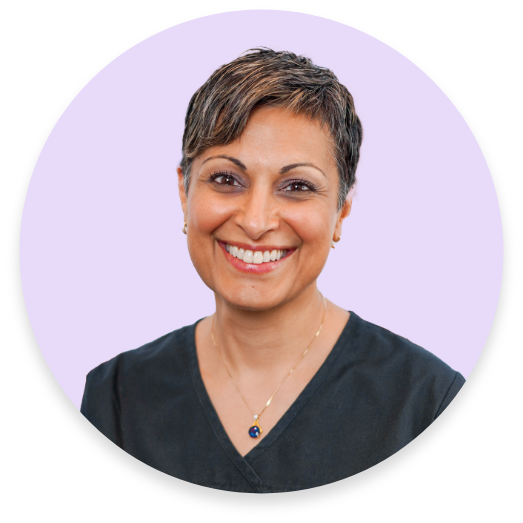
General dentist Dr. Simali Garach and every member of our Queen King Dental family are dedicated to enhancing the well-being of our patients, one smile at a time. Offering a wide range of preventive, restorative, cosmetic, and periodontal services, we strive to establish enduring relationships based on trust and mutual respect. We hold our patients in high esteem and prioritize their needs above all else. Call us today, and let's work together to prioritize your beautiful smile!










Have Insurance Questions?
Contact Us
Today
If you want to know more about us, our approach to dentistry, and how we can help you care for your smile, contact us today. Our friendly and knowledgeable staff is excited to get to know you better and help you reach your oral health goals!
Read Our Awesome Reviews
- Derek T
- Grace D
- James C