

Guided Implants Oakville
Guided implants in Oakville represent a significant evolution in how dental implants are planned and placed. At Queen King Dental, we use computer-guided implant surgery-a methodology that combines 3D imaging, digital treatment planning, and surgical navigation to position implants with submillimeter precision.
For patients in Oakville and the surrounding region seeking tooth replacement, guided implant technology addresses a fundamental challenge: traditional implant placement relies on the surgeon's tactile sense and visual reference alone, leaving room for angular deviation or depth variation that can compromise long-term success. Guided surgery eliminates much of that variability.
The Problem: Why Traditional Implant Placement Has Limitations
A patient comes to Queen King Dental after losing a molar to decay. The tooth has been gone for several months. The patient is healthy, has adequate jawbone, and wants a permanent solution. On the surface, implant placement seems straightforward. But traditional freehand surgical technique introduces several variables that affect the final outcome.
Without digital guidance, the surgeon must estimate the ideal angle, depth, and anterior-posterior position of the implant based on anatomical landmarks visible during surgery. The patient's bone anatomy-particularly in Oakville's diverse adult population, where bone density and ridge morphology vary widely-may not match textbook expectations. A deviation of even 5 degrees in implant angulation can alter crown positioning, increase stress on the implant-bone interface, or make future restoration more difficult. Depth errors of 1-2 millimeters can place the implant too close to the inferior alveolar nerve or too shallow, risking later complications.
For patients with dental anxiety, the extended surgical time and uncertainty that accompanies traditional placement adds psychological strain. Patients in Oakville who have had negative dental experiences worry not just about pain, but about whether the implant will truly solve their problem.
Our Approach: Computer-Guided Implant Surgery in Oakville
Queen King Dental uses a three-stage process that transforms implant placement from estimation into predictable engineering.
Stage 1: Advanced Imaging. We begin with a cone-beam computed tomography (CBCT) scan-a specialized 3D X-ray that captures the patient's jawbone anatomy with micrometer precision. Unlike traditional 2D radiographs, CBCT shows bone density, ridge width, height, and the exact position of vital structures such as the inferior alveolar nerve and the maxillary sinus. The iTero digital scanner we use in our Oakville clinic captures soft-tissue contours and existing dentition in the same coordinate system, so we can plan the implant position relative to both bone and the final crown.
Stage 2: Digital Treatment Planning. Our dentists, including Dr. Larry Levin and Dr. Kim Kwon, use specialized software to design the implant position in three dimensions. The plan specifies the exact entry point on the ridge, the depth of insertion, the angulation relative to the vertical and sagittal planes, and the ultimate crown position. This plan is not a suggestion-it becomes the surgical target. We verify that the planned implant position provides adequate bone support, respects anatomical boundaries, and permits a crown that will be esthetically and functionally sound. For patients in Oakville who need multiple implants or who have complex anatomy, this planning phase prevents costly errors.
Stage 3: Surgical Guidance. On the day of placement, a custom surgical guide-a rigid template fabricated to match the patient's specific anatomy-is seated on the teeth or bone. The guide contains tubes that constrain the surgical drill and implant insertion instrument to follow the planned path. The surgeon's technique is refined by the guide; the guide enforces the predetermined angle and depth. Real-time navigation systems can also display the surgeon's current position relative to the plan, offering additional confirmation. The result is an implant placed within the parameters that were designed to succeed.
This approach also reduces surgical time. Because the surgeon does not need to pause and reassess anatomy or make intraoperative adjustments, the procedure is often faster and less traumatic to surrounding tissues. For patients with dental anxiety in Oakville, a shorter, more controlled procedure means less time in the chair and greater confidence that the outcome matches what was discussed in consultation.
The Outcome: Precision, Predictability, and Patient Confidence
A patient from Oakville underwent guided implant placement for a missing upper premolar. The CBCT scan revealed that the bone ridge in that area was 6.8 millimeters wide-barely adequate for a standard 6-millimeter diameter implant. Using traditional freehand technique, the surgeon would have faced uncertainty about the degree of buccal cortex encroachment and might have opted for bone grafting, adding cost and time. The guided plan, however, showed that a 5-millimeter diameter implant, inserted at a precise 12-degree buccal inclination, would nestle entirely within the bone envelope while still providing a platform for an esthetic crown. The surgery took 18 minutes. The implant healed uneventfully, and four months later, a ceramic crown was placed that matched the adjacent teeth in color, contour, and emergence profile.
This level of precision has multiple downstream benefits. The implant integrates more consistently because it is surrounded by living bone rather than subject to micromotion. The crown sits in a position that the patient can clean easily, reducing peri-implant disease risk. If the patient ever needs a different restoration, the implant position already supports optimal esthetics and function. And because the outcome matches the preoperative design, the patient's expectations are reliably met-a powerful antidote to the anxiety that many Oakville residents carry about dental treatment.
Queen King Dental has integrated guided implant surgery into our broader commitment to patient comfort. Patients receive weighted blankets during surgery, InLight Therapy to manage inflammation, and aromatherapy in recovery to ease the transition from anesthesia. Our team prioritizes same-day appointments for emergencies and coordinates complex cases so that patients spend less total time in treatment. We view guided implant technology not as a luxury add-on, but as part of a clinical philosophy that honors precision, respects patient time, and acknowledges the emotional dimension of dental care.
If you are in Oakville and considering dental implants-whether you have been told implant placement might be difficult, or you simply want the most predictable outcome-we invite you to discuss guided implant surgery with Queen King Dental. We can review your anatomy, explain what guided planning reveals that traditional imaging does not, and help you understand whether this approach is right for your situation. Contact us to schedule a consultation and see how this technology can serve your smile.
Frequently Asked Questions
How is guided implant surgery different from standard implant placement?
Guided implant surgery uses 3D imaging, digital planning, and a surgical template to position the implant to exact specifications before surgery begins. Standard placement relies on the surgeon's visual assessment and feel during the procedure. Guided surgery reduces angular deviation, ensures correct depth, and typically shortens surgical time, leading to more consistent, predictable outcomes.
Is guided implant surgery available in Oakville?
Yes. Queen King Dental offers computer-guided implant placement using advanced CBCT imaging and digital planning software. Our team includes experienced dentists trained in guided surgical technique and equipped with the technology necessary to execute precise implant positioning for patients in Oakville and the surrounding region.
What happens if my jaw bone is too thin or narrow for an implant in Oakville?
Guided planning reveals the exact dimensions of your bone and may show that an implant can fit safely in a narrower ridge if positioned at a specific angle-a determination that traditional imaging alone cannot reliably make. In some cases, bone grafting is still necessary, but guided planning often eliminates the need for it. Our dentists will discuss what your anatomy supports and what trade-offs exist between different options.
Whiten Your Smile … Virtually! Try It Now!
Get A Glimpse Of Our Care!
With our iTero intraoral scanner, our team can create incredibly precise, natural-looking, and durable crowns, bridges, implants, and more. Watch this video to learn more!
Ask Us About InLight Therapy!
Top Reasons We Could Be Perfect For You & Your Family

Proven Technology
Zoom Whitening
Tailored Care
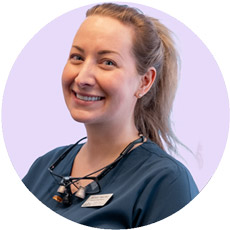
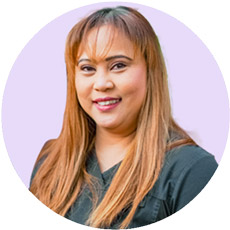
Meet Our Doctor & Team
General dentist Dr. Simali Garach and every member of our Queen King Dental family are dedicated to enhancing the well-being of our patients, one smile at a time. Offering a wide range of preventive, restorative, cosmetic, and periodontal services, we strive to establish enduring relationships based on trust and mutual respect. We hold our patients in high esteem and prioritize their needs above all else. Call us today, and let's work together to prioritize your beautiful smile!














Have Insurance Questions?

Contact Us
Today
If you want to know more about us, our approach to dentistry, and how we can help you care for your smile, contact us today. Our friendly and knowledgeable staff is excited to get to know you better and help you reach your oral health goals!
Read Our Awesome Reviews
- Derek T
- Grace D
- James C